About Ranbir Singh Sandhu:
Dr. Ranbir Singh Sandhu is Professor Emeritus at The Ohio State University. Although he has had an illustrious career in his field, he is also renowned for his personal journey as a Sikh. He has been an active, well-respected, and valued authority on the Sikh Faith since 1965, when he came to the USA as a doctoral student at the University of California, Berkeley. Over the years, he has inspired Sikhs to gather in prayer services and helped them organize into formal groups to establish Sangats (congregations), creating Sikh centers and groups that follow the Rehat guidelines to set their organizational standards.
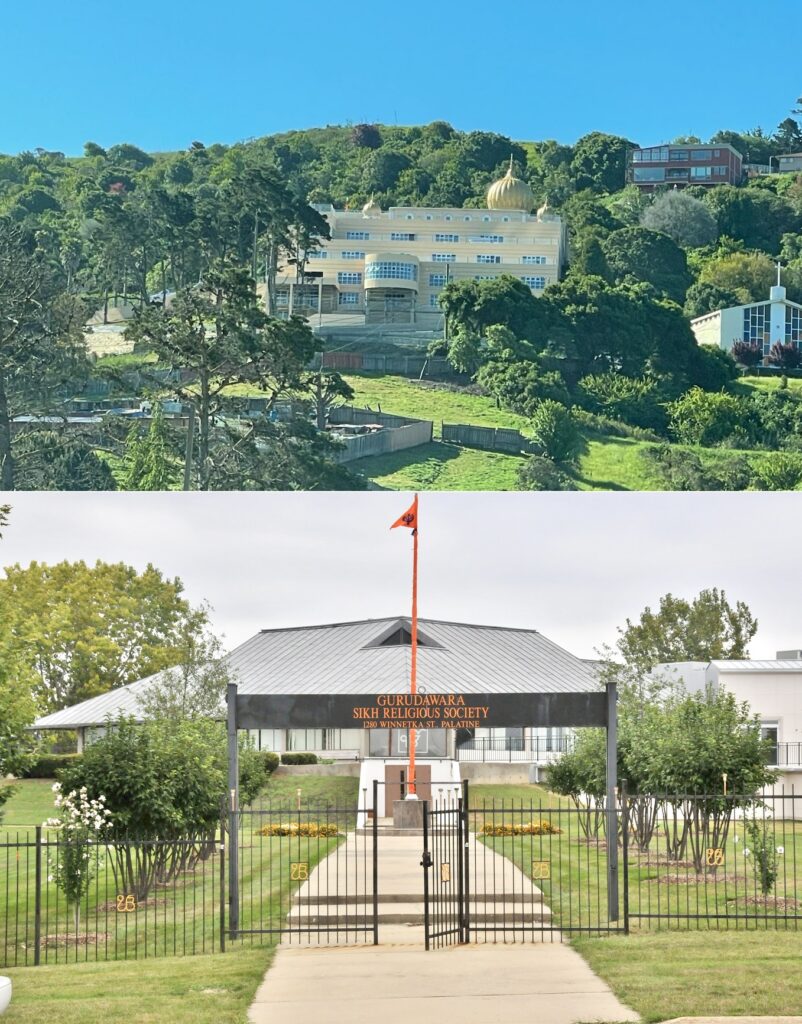
In the 1960s, when all Sikh members were active participants and met at people’s homes, the goal was to establish Gurdwaras – Sikh places of worship in a community. He was an original member of The Sikh Center of the Bay Area during his time as a graduate student at UC Berkeley. The Sikh Center later established the first Gurdwara Sahib in the San Francisco Bay Area in El Sobrante. After graduating, he moved to Chicago, where he was a founding member of the Sikhs who actively determined, planned, and raised funds to erect a Gurdwara in Palatine, Illinois (the first formal sangat in the greater Chicago area). Since the 1980s, his focus changed from establishing places of worship (Gurdwaras) to Baani Study, interfaith understanding of the Sikh faith, and more communication through interfaith outreach.
Dr. Sandhu continuously sought out resources to deepen his understanding of the Baani (The Message as recorded in the Guru Granth Sahib). Similar to other practicing Sikh families, he would discuss the prayers with his wife to clarify their common understanding based on their knowledge, reading, and understanding. He and his wife would jointly translate passages of the daily (NitNem) prayers and also the daily Hukam (Message of the day) to their children in simplified Punjabi and English, yet mindful of the nuance in word usage. He would share his understanding with their friends, which also helped all the participants to gain great clarity. He has spent much of his life studying the Message, or “the Name,” as written in Siri Guru Granth Sahib, and included others in reading, reflecting, and living according to their shared understanding and awareness. Oftentimes they prayed and studied the Baani together as a family, but both he and his wife also read Baani independently at their own pace, taking notes as they read.
They would discuss their notes and then seek opportunities to discuss the explanations with Sikh elders, scholars, and academics. They researched and studied texts explaining the Message and the grammar of Punjabi and the other languages used from the 1400s and before.
Dr. Sandhu is fluent in many languages. He was formally educated in Hindi, Urdu, Sanskrit, German, Russian, and English. He taught himself his mother tongue (Maboli), Punjabi, because it was not taught when he was a student in British India. Having lived, studied, researched, taught, and subsequently also lectured in both England, the U. S., and many European countries, he was able to translate Baani more precisely with less formal and more direct language. As people realized that he had a good understanding and expression to explain the Message and concepts from Baani, he was often asked to explain, and then also invited to share his knowledge and understanding with Sangats all over the country. Over time, he started writing down many of the explanations that he was asked to translate repeatedly. He was often asked to write and share what he had said, so he created handouts, pamphlets, and brochures of the items and prayers other Sikhs requested. There were also requests from interfaith and religious study groups and organizations.
He co-founded several organizations over the years with his close Sikh friends and family, including The Sikh Religious and Educational Trust (SRET), The Sikh Educational and Religious Foundation (SERF), and the Sikh Council for Interfaith Relations (SCIR). He is a past secretary of the World Sikh Council-America Region (WSC-AR).
In 1981, before his daughter’s marriage, he realized that the Sikh marriage wasn’t legally recognized in Ohio. He worked with Ohio’s state legislature to have the Sikh wedding ceremony recognized as an accepted legal marriage in Ohio. He has also been instrumental in helping Sikhs gain access to decision-makers in the Armed Forces in order that practicing Sikhs may maintain their Sikh appearance while serving in the Armed Forces. He was the president of the Interfaith Association of Central Ohio from 1997 to 1998. In 2003, he contributed the chapter, The Sikh Faith, in the book Religion in Ohio, Profiles of Faith Communities, in commemoration of the state’s bicentennial.
Dr. Ranbir Singh Sandhu also presented a message at the Parliament of the World’s Religions (PoWR) held in Chicago in 1993. He attended, presented, recruited, and invited Sikhs from around the world to participate in subsequent PoWR and other interfaith events. He has constantly and continuously encouraged and supported young Sikhs around the globe to participate both locally and internationally. His last big effort was in his book, Struggle for Justice: Speeches and Conversations of Sant Jarnail Singh Bhinderanwale. Many of his speeches, presentations, brochures, and shared thoughts are contained here.